

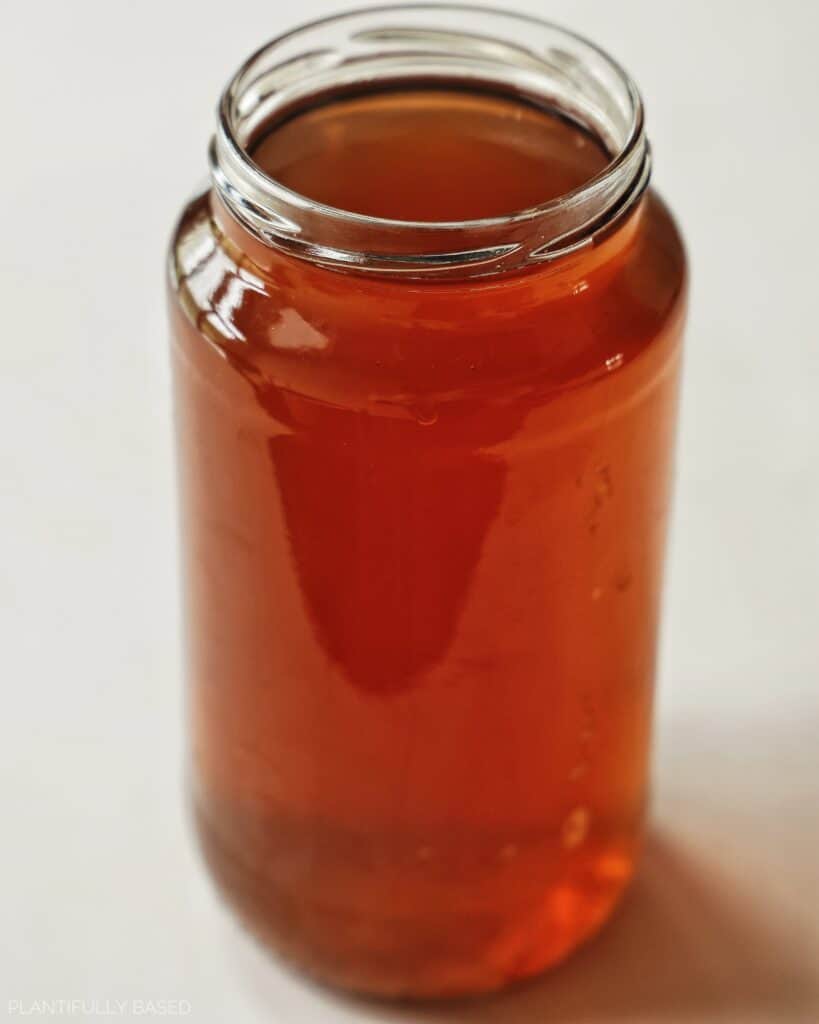
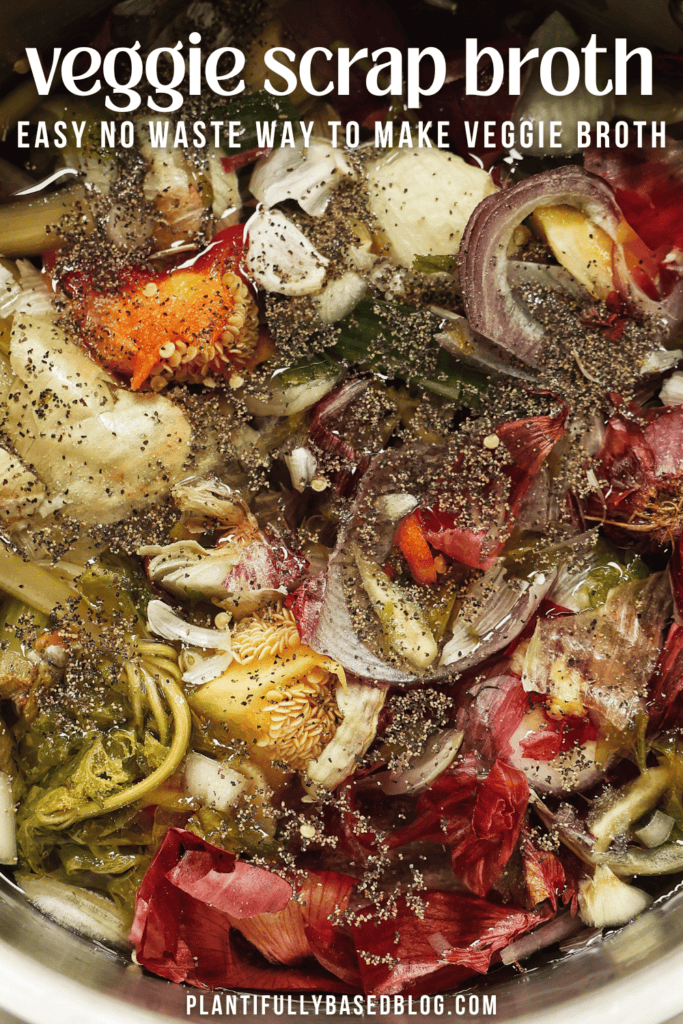
this veggie scrap broth is the perfect way to use up all the stuff you are normally throwing out from vegetables! incredibly easy to make and so delicious.
the inspiration
Now, let’s make one thing clear I didn’t invent this. People have been making vegetable broth from scraps for centuries. However, this was really new to me within the last year.
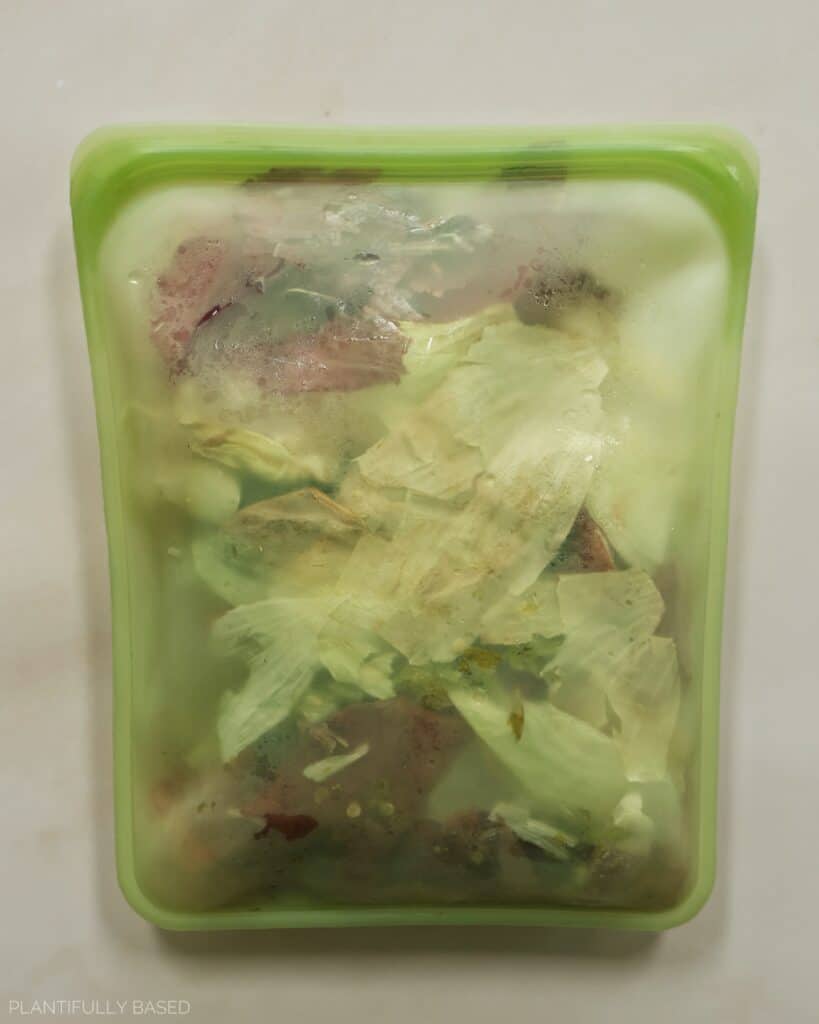
Obviously, being a vegan and a food blogger I tend go to through a lot of vegetables. It would pain me to throw away so many scraps because I did pay for that part of the vegetable too. So, I started saving my scraps in a freezer bag and every 4 to 6 weeks, whenever the bag is full, I make homemade broth!
This blog post will teach you how to not only make the veggie scrap broth but also show you what to do with the vegetables after boiling.
what vegetable scraps should I save ?
Before we can even start making veggie scrap broth we have to start saving our veggie scraps. However, not all scraps are created equal and some make for a better color and flavor while others do not. I like to save them all in a large Stasher bag. It takes me anywhere from 4-6 weeks to save them up.
Here is a list of vegetable scraps that are great for saving:
- Anything mirepoix related: carrot peels, celery ends and tops, onion skins and onion. However, do note a lot of onion can result in a bitter flavor. I typically have the skins of 1-3 onions in my mix and it has always been fine. If you are doing more than that save some for your next batch.
- Anything light in flavor: garlic skins, bell pepper tops and insides (I do include the seeds), green onion tops, zucchini skins, leeks, tomatoes. I have also used broccoli and cauliflower stems.
- Peels/Skins: I have done some sweet potato peels and regular potato peels before. However, again not too many of these as they can add in a bitter flavor and dark color. I have also done the edible peels of fruit like apples.
- Herbs: of course this is a great time to use scraps of basil, parsley, oregano, etc. Whatever you have.
- Mushrooms: now full disclosure here, if you are a reader of the blog you know I dislike mushrooms. So, I have never used mushroom scraps in a broth. However, I know mushrooms add nice umami so I do think you can use some mushroom scraps in your broth.
what vegetable scraps should I avoid?
Here is a list of vegetables to avoid or use minimally:
- Cruciferous: anything like kale, Brussels sprouts, or cabbage can give the broth a bad taste. You are better off to either avoid these or use the scraps minimally. I have not had a problem when adding in broccoli and cauliflower, however, they are considered cruciferous so I would use those minimally.
- Moldy vegetables: I think this should go without saying but please do not use anything that is molded or rotted in your broth.
- Beets: this will overpower and also give your broth a very deep red color which is not exactly ideal.
- Cucumbers: I do not add in any cucumber skins or insides. They are full of water and I personally do not find a use for them in the broth.
- Eggplant Skins: it is not a typical broth ingredient and I personally wouldn’t use it here.
So, basically if you think about what typically makes a soup taste nice and have good flavor. Use all of those scraps. If you are unsure about a vegetable you are using if it has a very strong smell maybe skip.
how to make the veggie scrap broth
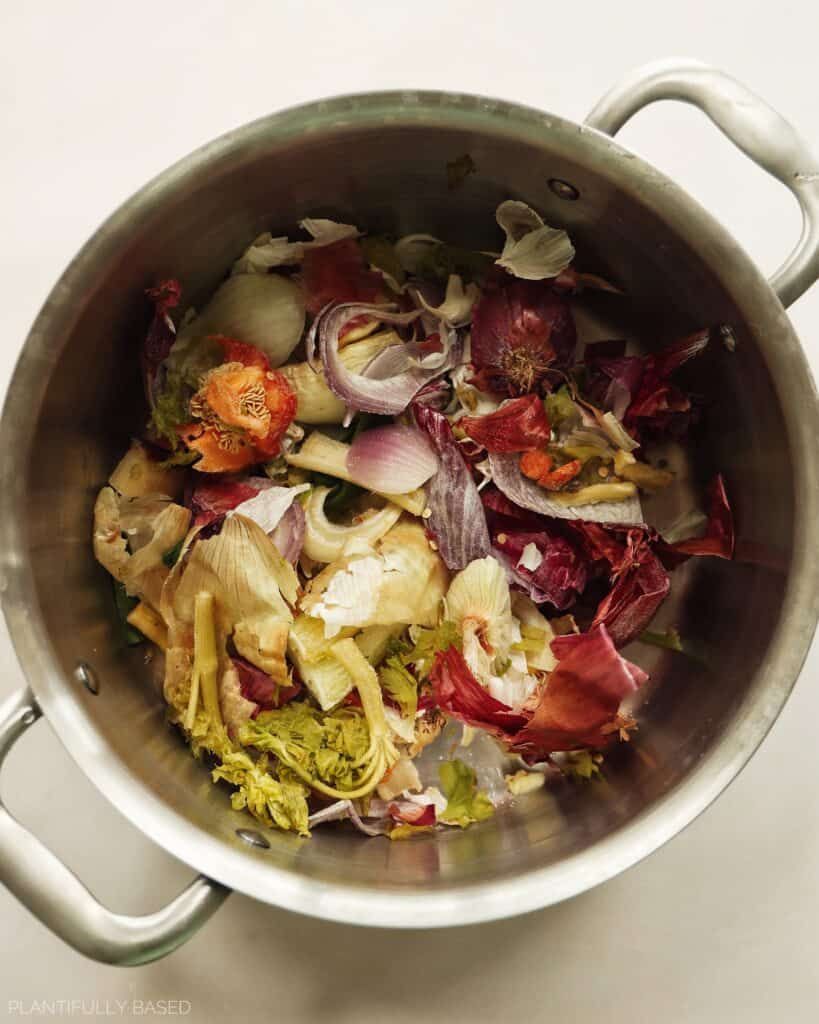
- Empty out veggie scraps into a large pot.
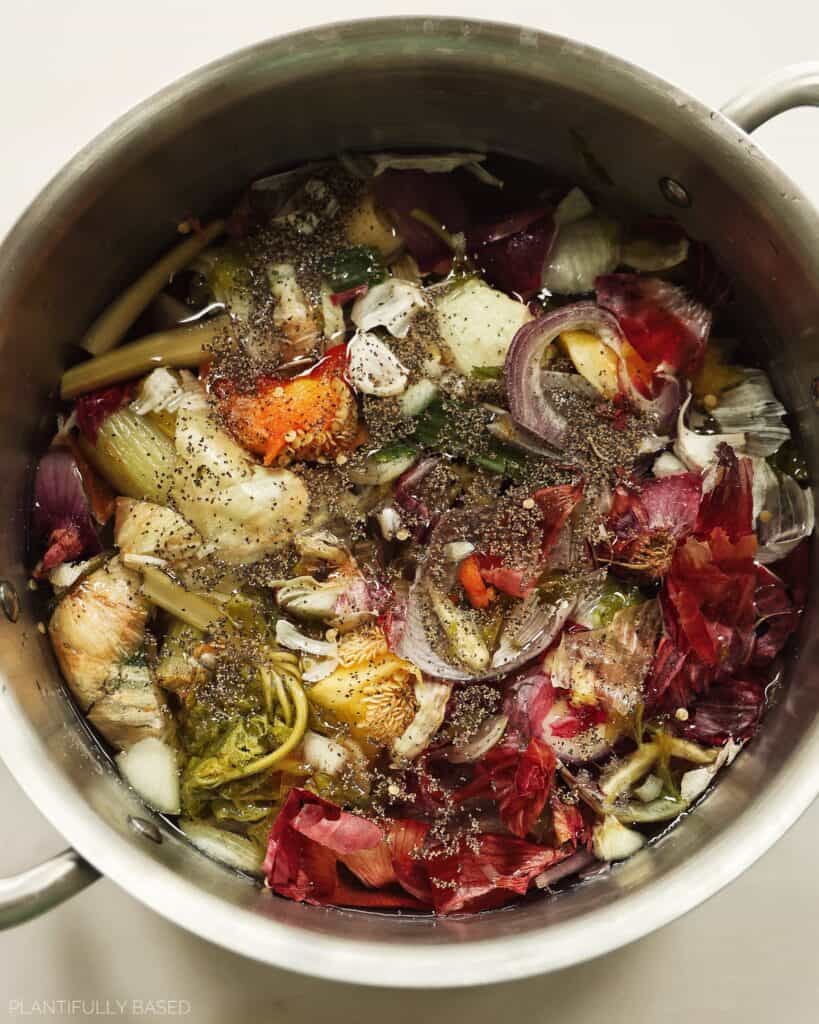
- Depending on how much broth you want you can add 12 to 16 cups of water. I like to add about 1 to 2 teaspoons of salt and black pepper as well. You can also add in bay leaves.
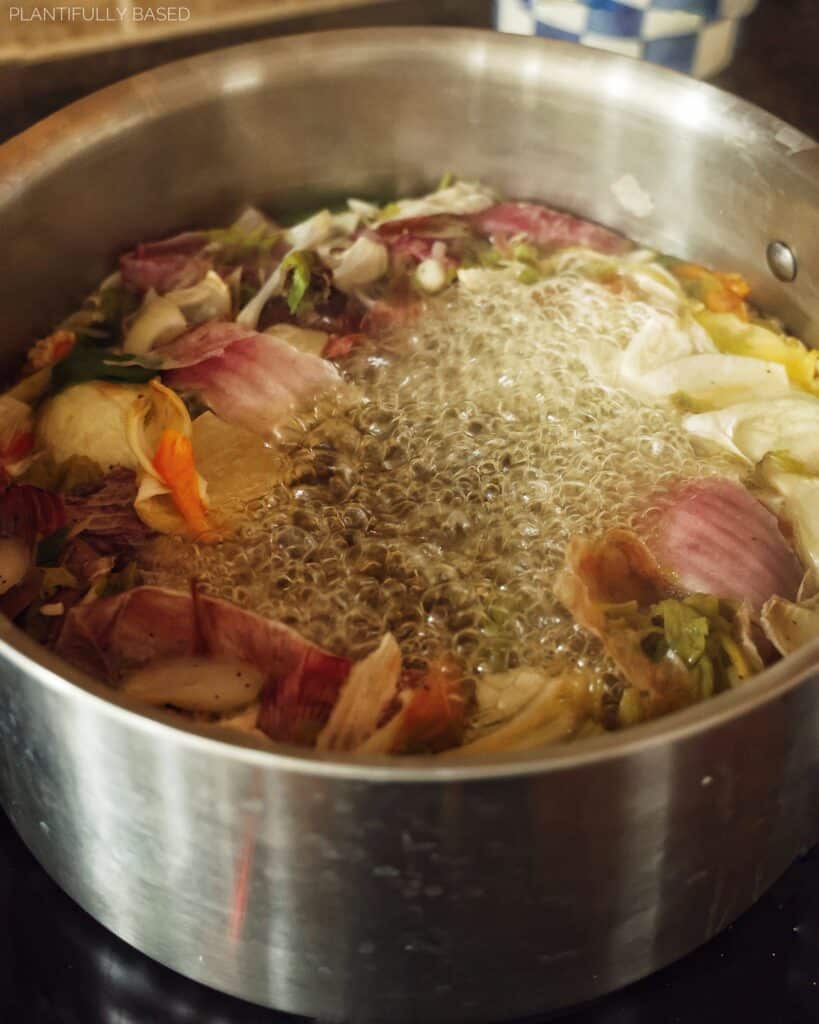
- Bring to a boil over high heat. Then, boil on the stove for 30 minutes.
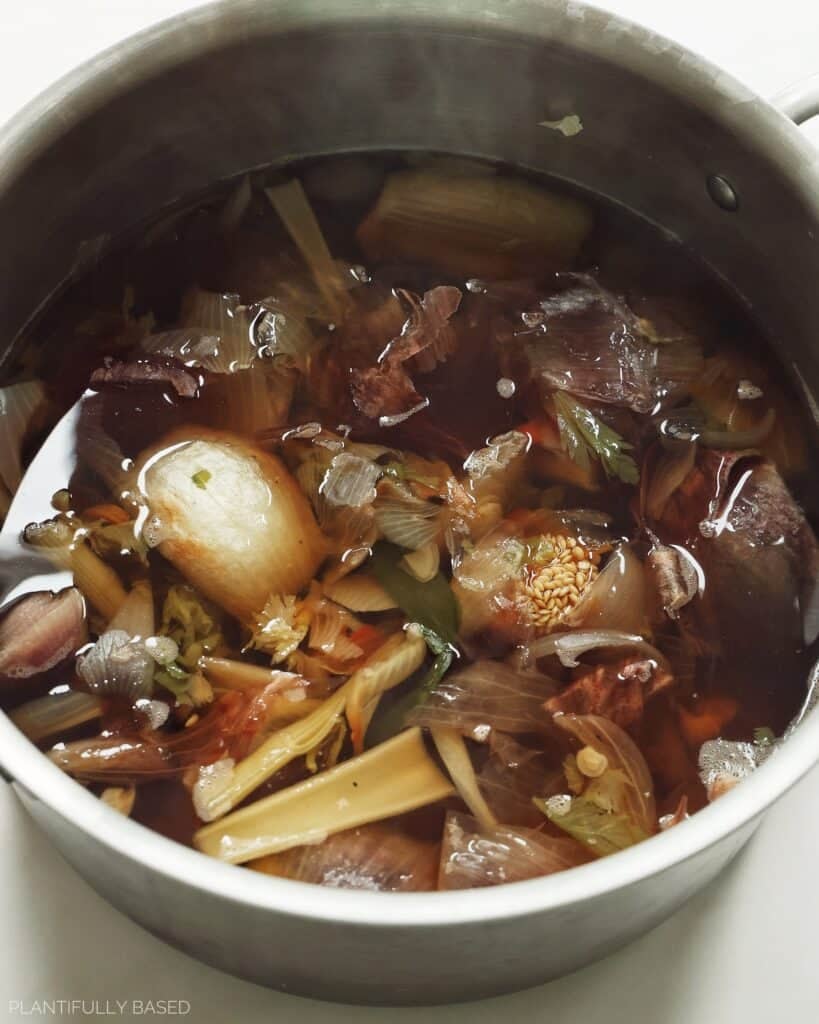
- Allow the veggie scrap broth to cool for 10 minutes.
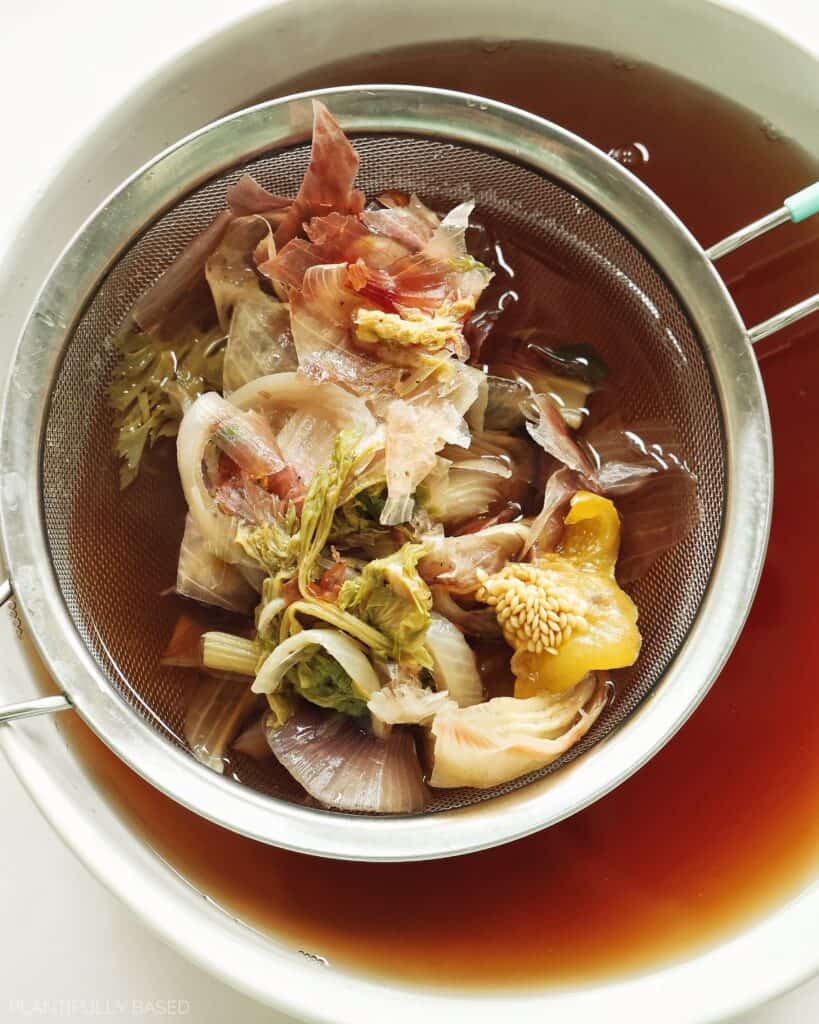
- Use a strainer and a large bowl to pour the veggie scrap broth into. Taste the broth and see if you want to add in anymore salt or pepper for flavor.
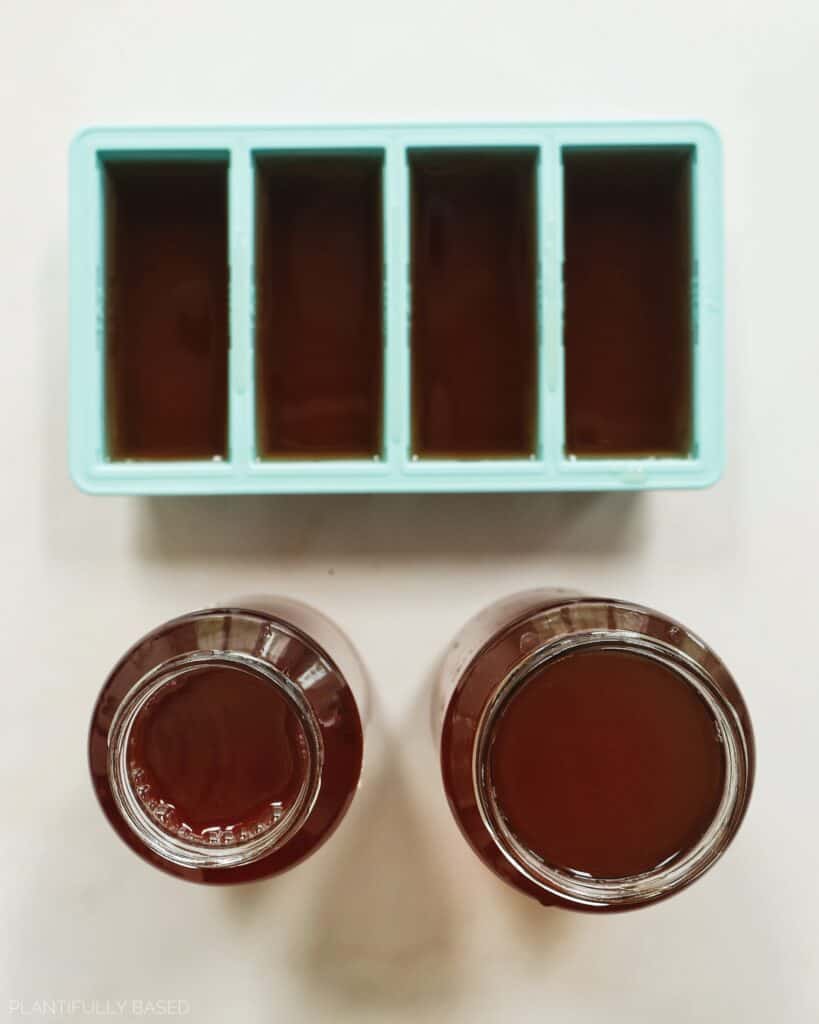
- Once fully cooled add into glass jars or containers. I also like to freeze it.
storing the veggie scrap broth
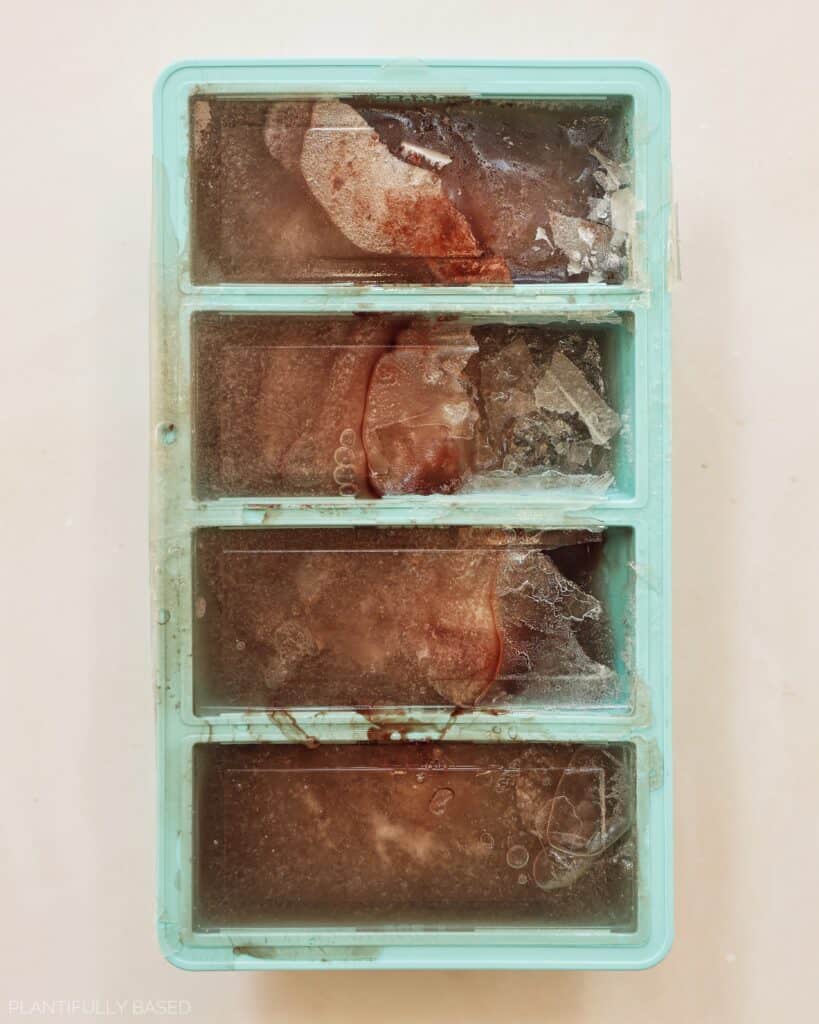
When, it comes to storing and saving the broth you have a few options! First, you can use it right away if you are making a soup or stew.
Second, once cooled transfer into glass jars and then store in the fridge for 1-2 weeks.
Third, you can freeze it. I have large 1 cup (250ml) silicone molds. So, it makes it great for saving the broth and having a stockpile in the freezer. Once it is frozen in the mold I will remove the cubes and put them in a bag in the freezer. When you want to use them all you have to do is add it to your recipe and the melt right in the pot, so easy! You can keep it in the freezer for several months.
what do i do with the scraps?
After you are done making your veggie scrap broth you still have scraps. So, now the question remains what do I do next?
First off, I am going to be honest sometimes I do throw them out. Don’t get mad at me but I already feel good about making use of them once so if I have to throw them out, it is what it is.
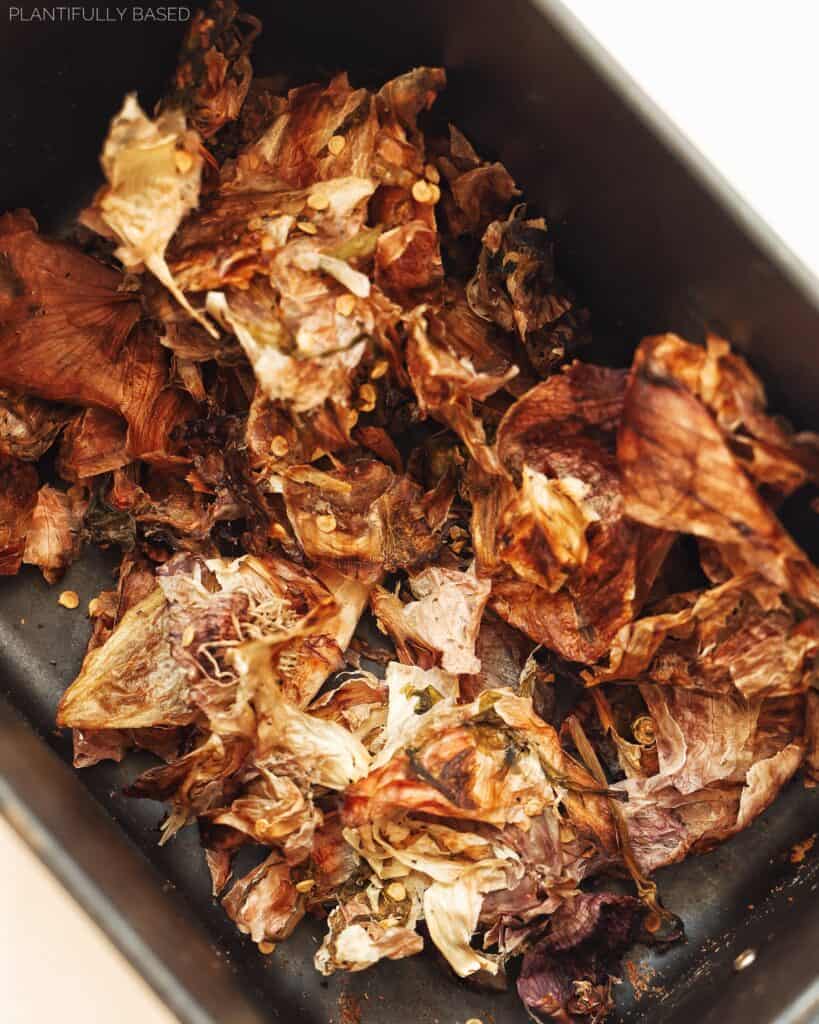
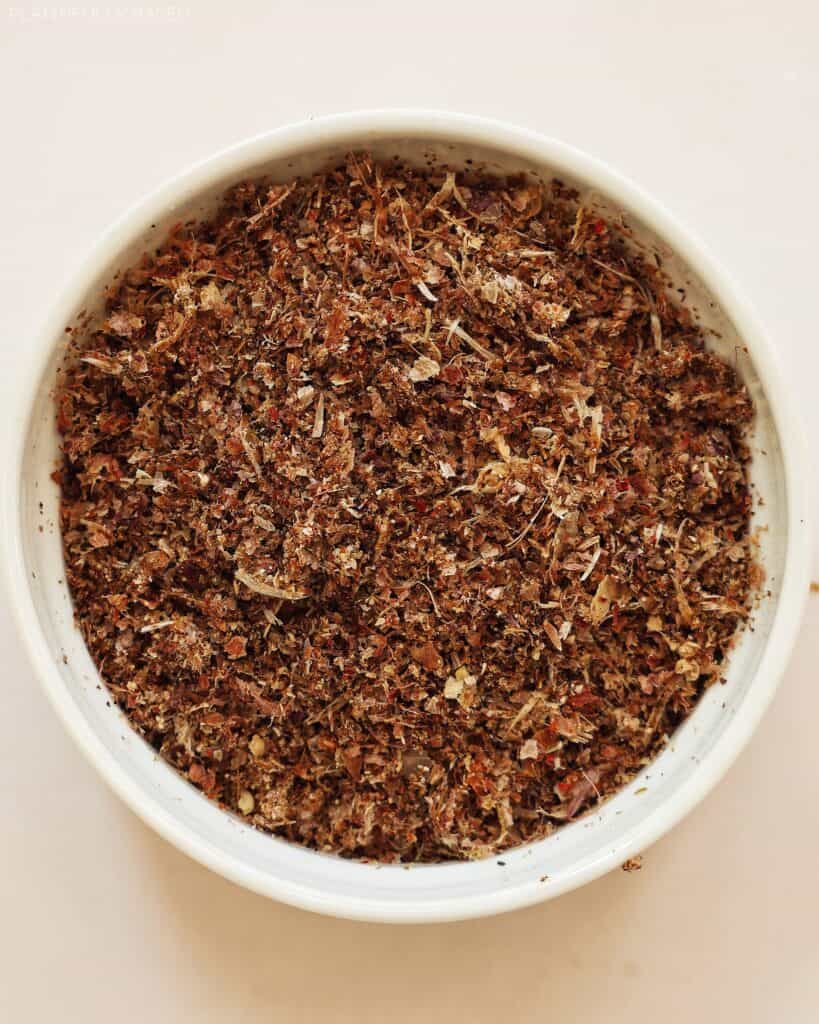
However, now that it is warmer out and my garden and plants are growing I can make a powder for the soil! All you need to do is dehydrate the scraps. I do this in my air fryer as it has a dehydrate setting but you can also do it in the oven or a dehydrator.
I dehydrated them for about 4 hours on 180°F until they were crispy and dried out. Then, I put it all in the blender and turned it into a powder. I sprinkled it into my veggie garden and there we go! Now, there is truly no waste.
why you’ll love making veggie scrap broth
I am so sad I only recently started doing this. There were so many years of wasted veggie scraps. But it’s okay now I know! I think this is a great way to stretch your veggies out and get a little extra bang for your buck.
Even if you don’t use veggie broth all the time, freezing it allows you to just always keep it on hand.
I also think there is just a nice feeling in making something homemade and using every part of the vegetable to make something. I ate them, then made broth, and made a little nutrient booster for my soil. It makes me feel like a rockstar, so I know it will make you feel good too.
It is also great because you are customizing it. You can add in specific flavors, vegetables, make it low sodium. It is really all up to you.
veggie scrap broth faq
Is this recipe allergy friendly?
Yes! It is only vegetable based. You can customize to add whatever you like and don’t like.
How do I store veggie scrap broth?
Please refer to the section above titled “storing the veggie scrap broth” it goes fully in depth. You can either refrigerate or freeze it.
Can I make this in a crockpot/slow cooker?
I actually haven’t tried doing that yet but I have been curious about it myself. I do think it would actually work fine. However, I am not quite sure on cooking time. I would probably start with high for 4 to 5 hours and check on it.
Can I make this in an Instant Pot?
Again, I haven’t tried this myself. However, I would imagine it would work out just fine.

over 75 amazing vegan recipes
Get My Cookbook, Plantiful!
“A fantastic cookbook that stands by itself outside a specific vegan genre. Inspirational and well thought out. I especially liked the early sections which have a great deal of explanation, clearly a lot of thought has gone into every page. If you are a vegan, vegetarian or just looking at adding in different ideas you should be this book! Essential for any kitchen library.”
Homemade Veggie Scrap Broth
Equipment
- Large Reusable Silicone Bag optional, for storing scraps
- Strainer
- Silicone Molds optional, if freezing broth
Ingredients
- around ½ pound to 1 pound of saved vegetable scraps
- around 12 to 16 cups water
- 2 teaspoons salt or taste
- 2 teaspoons black pepper or to taste
- Optional: 2 to 3 bay leaves
Instructions
- Save veggie scraps for a few weeks. Pleas read whole blog post for full details on what veggies to save and how to store. Empty out veggie scraps into a large pot.
- Depending on how much broth you want you can add 12 to 16 cups of water. I like to add about 1 to 2 teaspoons of salt and black pepper as well. You can also add in bay leaves.
- Bring to a boil over high heat. Then, boil on the stove for 30 minutes.
- Allow the veggie scrap broth to cool for 10 minutes.
- Use a strainer and a large bowl to pour the veggie scrap broth into. Taste the broth and see if you want to add in anymore salt or pepper for flavor.
- Once fully cooled add into glass jars or containers. I also like to freeze it.
Notes
- This is a rough recipe and estimation. You can use as little or as much water and veggie scraps as you like. There is no wrong way to do this. The less scraps you have the less water I would add so it is not so diluted and low in flavor.
- You can control the salt levels and add as much or as little salt as you like.
- If you need help I encourage you to read the full blog post through as I included a lot of information.
Did you try this recipe? Tag me on Instagram @plantifullybased to let me know how it went. If you enjoyed this recipe please be sure to leave a comment or review, it is so helpful for the blog. Thank you!
Plantifully Based® is part of the Amazon Affiliate Partner Program. Links on here may be from Amazon or other affiliate programs. If you decide to purchase through a link I will receive a small commission. This helps to run the blog and make more recipes.

hey there!
Hey, I’m Francesca!
Thank you for checking out my recipe! I am happy to have you here and hope you explore more delicious vegan recipes.
Leave a Reply